
Equity benchmark indices Sensex and Nifty ended lower on Thursday after US President Donald Trump announced the imposition of a 25 per cent tariff on all goods coming from India starting August 1 and an unspecified penalty for buying Russian crude oil and military equipment.
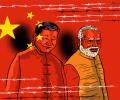
The bilateral trade between India and China has been growing at a healthy rate, but the trade gap remains sharply tilted in Beijing's favour. India has time and again flagged its concern over the ballooning trade deficit and the non-trade barriers faced by Indian goods in the Chinese market.

Equity benchmarks face a key test as investors weigh consumption revival hopes against tariff pressures and weak earnings. Amidst this, HSBC has outlined tailwinds and risks that could cap gains.

Despite news of the private equity in the domestic healthcare and pharma industry touching almost Rs 40 crore (Rs 40 million) in the first nine months of the year, PE firms are not exactly bullish about investing in the pharma industry alone. In fact, a closer look at the investments reveals that a larger part of the money is being flown into healthcare delivery systems like hospital chains and not in pharma companies.
The rapidly progressing Indian pharma industry, assisted by a strong research and development base, skilled manpower, low-cost base and manufacturing excellence has provided the industry with the right platform to move towards achieving its goal.

'What India has done will surely embolden more countries to stand up to Trump.'

Tata Steel, Maruti, Tata Motors, Infosys, Bharti Airtel and Tech Mahindra were also among the laggards. However, Trent, Asian Paints, Hindustan Unilever, ITC, Kotak Mahindra Bank, and Reliance Industries were the gainers.
With a view to boost the vibrant pharma industry in the state, Andhra Pradesh government plans to set up mini-pharma cities

From the Sensex firms, Trent, Tech Mahindra, Bajaj Finserv, Reliance Industries, Infosys, Kotak Mahindra Bank, HCL Technologies, and NTPC were among the biggest laggards. However, Eternal, Tata Motors, Sun Pharma, Tata Steel, and Titan were the gainers.
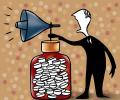
Hospitals to recover from sluggish Q3; diagnostics' growth rate at pre-Covid levels.

As the Drugs Controller General of India (DCGI) is set to crack down on companies to ensure compliance with printing QR codes on top-selling brands to curb counterfeiting, top pharma companies say they welcome the regulator's mandate and that they are on track. They also view it as a positive step to ensure patient safety. Sheetal Arora, CEO of Mankind Pharmaceuticals, which has already adopted QR codes in 20 of their products, stated: "We strongly advocate for mandatory implementation of barcodes and QR codes on medicines as this initiative will not only protect patients but also strengthen the integrity of our healthcare system by reducing circulation of counterfeit drugs."

From the Sensex pack, Asian Paints, UltraTech Cement, Power Grid, ICICI Bank, Reliance Industries, Hindustan Unilever, Bharat Electronics and Sun Pharma were among the major gainers. In contrast, Trent, Eternal, Axis Bank and Titan were among the laggards.
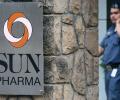
Sun Pharmaceutical Industries reported a 34 per cent year-on-year (Y-o-Y) jump in net profit to Rs 2,654.6 crore in Q4FY24.

Eternal was the biggest gainer in the Sensex pack, jumping 4.50 per cent, followed by Power Grid, ICICI Bank, Reliance Industries, UltraTech Cement, Adani Ports, Sun Pharma, ITC and Hindustan Unilever were also among the winners. In contrast, IndusInd Bank, Axis Bank, Bajaj Finserv and Bajaj Finance were among the laggards.

Among Sensex firms, Tech Mahindra, HCL Tech, Eternal, Axis Bank, Maruti, Tata Steel, HDFC Bank and Asian Paints were the gainers. However, Adani Ports, Trent, Tata Motors, Hindustan Unilever and NTPC were among the laggards.

The National Pharmaceutical Pricing Authority will monitor how companies are increasing prices of non-scheduled drugs.

Among Sensex firms, Eternal, Infosys, Asian Paints, HDFC Bank, Bajaj Finserv and Titan were the major gainers. However, Tata Steel, Tech Mahindra, Adani Ports and Bharat Electronics were among the laggards.
Indian pharmaceutical firms foresee minimal disruptions in trade with Israel despite escalating regional tensions. Rising crude prices and export shipping insurance premiums have raised concerns, but the pharmaceutical sector remains optimistic. Pharmaceutical exports from India to Israel in FY 2020-21 amounted to $32.5 million, which represents only a minor segment of India's overall pharma exports.

Benchmark stock indices Sensex and Nifty rebounded on Thursday after two days of decline, mirroring a rally in global markets as a US court blocked President Donald Trump's reciprocal tariffs. The 30-share BSE Sensex climbed 320.70 points or 0.39 per cent to settle at 81,633.02.
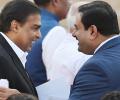
Who else will take on the might of Microsoft, Google, and Amazon if not the Adanis, Ambanis, Birlas, or Tatas?, asks R Jagannathan.

Nine people remain missing following the explosion at the Sigachi Industries' pharma plant in Pashamylaram, Telangana, which claimed 38 lives. An expert committee is investigating the cause of the blast.

Stock markets are in for an event-heavy week ahead with a raft of Q1 earnings from blue-chips, the US Fed interest rate decision and foreign investors trading activity driving investors' sentiment, analysts said. Macroeconomic data announcements, monthly auto sales numbers and global market trends would also guide movement in the domestic equities, they said.
India has not accepted the demand of the UK for inclusion of a 'data exclusivity' provision in the free trade agreement, announced on May 6, in a bid to protect the interests of the domestic generic drugs industry, an official said. During the negotiations, the UK had asked to include this provision in the trade pact.
From the Sensex firms, Eternal, Power Grid, ITC, Bajaj Finserv, Nestle, Axis Bank, Kotak Mahindra Bank and Adani Ports were among the biggest gainers. Sun Pharma was the only laggard, declining nearly 2 per cent.

Pharma major Dr Reddy's Laboratories has opposed the parliamentary Standing committee's recommendations of increasing the number of drugs under price control and cap on profit margins of all medicines.
Donald Trump's tariffs, meant as political punishment, have avoided the predicted chaos, lifting US growth, weakening rivals, and letting him claim victory in a resilient global economy, observes T T Ram Mohan.

Infosys will comply with whatever regulations and guidelines Karnataka comes up with, a top company official said on Thursday on the proposed reservations for locals in private firms in the state. Infosys employs over 3.15 lakh people at present across the globe. "We are planning to work with all the regulations of the state and central governments.
We give you a perspective of the Indian pharma industry by carrying out a SWOT analysis.

Life Insurance Corporation (LIC) , the country's largest domestic institutional investor (DII), has seen a Rs 46,000 crore erosion in the value of its equity holdings amid market downturns in July. The benchmark indices, Nifty 50 and BSE Sensex, have slipped 2.6 per cent from their June 2025-end level to 24,837 and 81,463.09 respectively.

An FIR filed against Sigachi Industries following a fatal explosion at its Telangana unit alleges the company used outdated machinery despite warnings from employees.

The government on Monday said that multinational companies (MNCs) are campaigning against domestic pharmaceuticals industry as their interests were getting impacted due to increasing global presence of Indian firms in the generic segment.
Unhappy with Chinese machinery and raw materials they have been importing so far, Pakistani pharmaceutical companies are now longing to increase their business ties with India, and asked New Delhi to relax the "stringent visa norms".
From the Sensex firms, Reliance Industries, Tech Mahindra, Eternal, HCL Tech, Infosys, IndusInd Bank, Tata Consultancy Services and Bajaj Finserv were the biggest gainers. In contrast, UltraTech Cement, Sun Pharma, Power Grid, NTPC, Kotak Mahindra Bank and Mahindra & Mahindra were among the laggards.

Communication channels between India and the US are open to resolve the ongoing tariff issues, and the glitch in trade ties is only temporary, given the long-term relationship between the two nations, government sources said on Wednesday. The US' 50 per cent tariffs on Indian exports to America came into effect from August 27, barring a few sectors.

Fund managers said investors remained positive on the pharma manufacturing activity in India, which further strengthened during the Covid-19 period, on account of restrictions imposed on pharma imports from China.

Currently, the spend on R&D as a percentage of GDP is just 0.9%
Rupee appreciation has hit the pharma industry as exports for the financial year 2007-08 are estimated to rise a moderate 7 per cent against the targetted 30 per cent growth. Besides rupee appreciation, the dent in exports due to pricing pressure in the US, where a lot of products have gone off patent recently, also affected the exports.
We asked readers to mail their queries about stocks they want to buy, sell or hold. Here's the response to their queries.
